 I apologize for the lack of posts lately; I've had some technical difficulties and a rather full work life keeping me otherwise occupied. Before I was entirely forgotten, I wanted to just post a few photos of this marvelous malachite urn at the Metropolitan Museum of Art.
 Probaly the most fascinating thing about it, other than that emerald green color, are the shadows created from the lighting. Two points to be made here: sometimes the affect of an object is more important than its existence and if you look past the obvious, sometimes you find something even more interesting. I'll be back soon!
 While working on a more in-depth post of a fantastic building I visited recently, I wanted to leave you with something just to let you know I'm still around! Located at the Metropolitan Museum of Art is a collection of ingenius bejeweled objects known as automatons. These machines, popular in the mid 18th century (as so many of my favorite things were!), were mechanical moving devices; a sort of early day robot! Often they were more than a mere toy and incorporated something useful, such as the clock seen here. Made by James Cox in London, 1766, this device still would fascinate and amaze the most ardent anti-antiquarian!
 You may remember I was talking about framing the sketch Patricia at PVE drew for my blog header, seen here. Well, I finally got it back from the framer and it looks fantastic! I chose an ebonized frame in an architectural acanthus leaf pattern which I felt grounded the drawing and matte as well as relate to the subject.
 I had it framed at L'Eclat de Verre in Cady's Alley near my office in Georgetown. I would highly recommend them based on their selection, friendliness and affordability.
 I think the added 'Lavis' or French Lines, drawn around the French Panel done with marbelized paper really add a lot to Patricia's beautiful drawing -what do you think based on the progression? It now has a proud spot on my gallery wall.
 In honor of this spring weather (nearly summer!) we're having here in DC, I thought I'd share with you a photograph of one of my favorite paintings at the Smithsonian American Art Museum; Spring Dance by Arthur Mathews (1917). The painting is based in aestheticism; the custom frame being a part of the whole work of art by including designs and colors found within the painting. Mathews was a prominent Arts and Crafts designer and artist practicing in San Francisco who depicted his native California. Enjoy your spring dance!
 This past weekend I tackled a project I have been contemplating for awhile. You may remember a few years ago, the generous Patricia from PVE designed my blog header that you see today. She sent me the original watercolor and I've refrained from having it framed because I've debated turning the mat into a French mat.
 A true French mat incorporates lines, watercolored borders and the occasional bit of marbelized paper. My bastardized version includes only the marbelized paper but I think it adds a little something to the overall look and feel of the drawing. I hope Patricia doesn't mind my interference with her work! I plan on having it framed (finally) in the next month and will be sure to show you all the final result!
 Have weekend plans here in DC? Why not stop by the National Gallery of Art to see the current show entitled Venice: Canaletto and his rivals. Canaletto seems to be in the air here in DC, with numerous galleries and antique shops throughout Georgetown showcasing paintings in similar style.
  At the entrance to the exhibit is an original 19th century gondola that was purchased by the artist Thomas Moran and brought to his house on Long Island.
 The timing seems ideal as I'm currently obsessed with the Venetian fantasy that is Vizcaya. You'll find me at NGA on Saturday!
 Last week, in my post on Vizcaya's bayside facade, I mentioned the pool which ingeniusly slips into the house for access and shelter.
 The Swan was kind enough to remind us that the pool's grotto has a ceiling which was painted by the artist Robert Winthrop Chanler.
 Chanler, like others involved with the project, received his education at the Ecole des Beaux-Arts in Paris. Deering hired him to work on an 'under sea' fantasy fresco to decorate the interior of the pool grotto.
 The exterior access to the pool is via flanking coral limestone staircases that matches the rest of the house's stone.
 Interior access to the pool was via the lower level through 2 sets of french stained glass doors. These doors are adjacent to held Deering's smoking room (soon to be a giftshop) as well as a bowling alley (soon to be cafe)!
 The ceiling was first sculpted of Gesso and painted while still wet to result in the fresco we see today. The floors are marble and echo others seen throughout the house. Notice the lovely bronze guardrails.
 Moulded seashells and other sea life decorate the scenes.
 The painting has not weathered the humidity nor the occasional hurricane damage well but the effect is still lovely. Imagine how lucky Deering's guests felt to be taking a dip here!
 In 1903, Roosevelt had a very grand piano commissioned from Steinway & Sons for the East Room. Steinway commissioned noted Aesthetic artist Thomas Dewing to paint the inside of the gilded case in a patriotic theme which he entitled America receiving the 9 muses.
 In the painted scene, women in colonial revival gowns representing art, music, poetry and learning pay homage to America, the new steward of western culture, as represented by the seated woman. The piano now resides at the National Portrait Gallery, but I think it should be brought back to the White House, don't you?
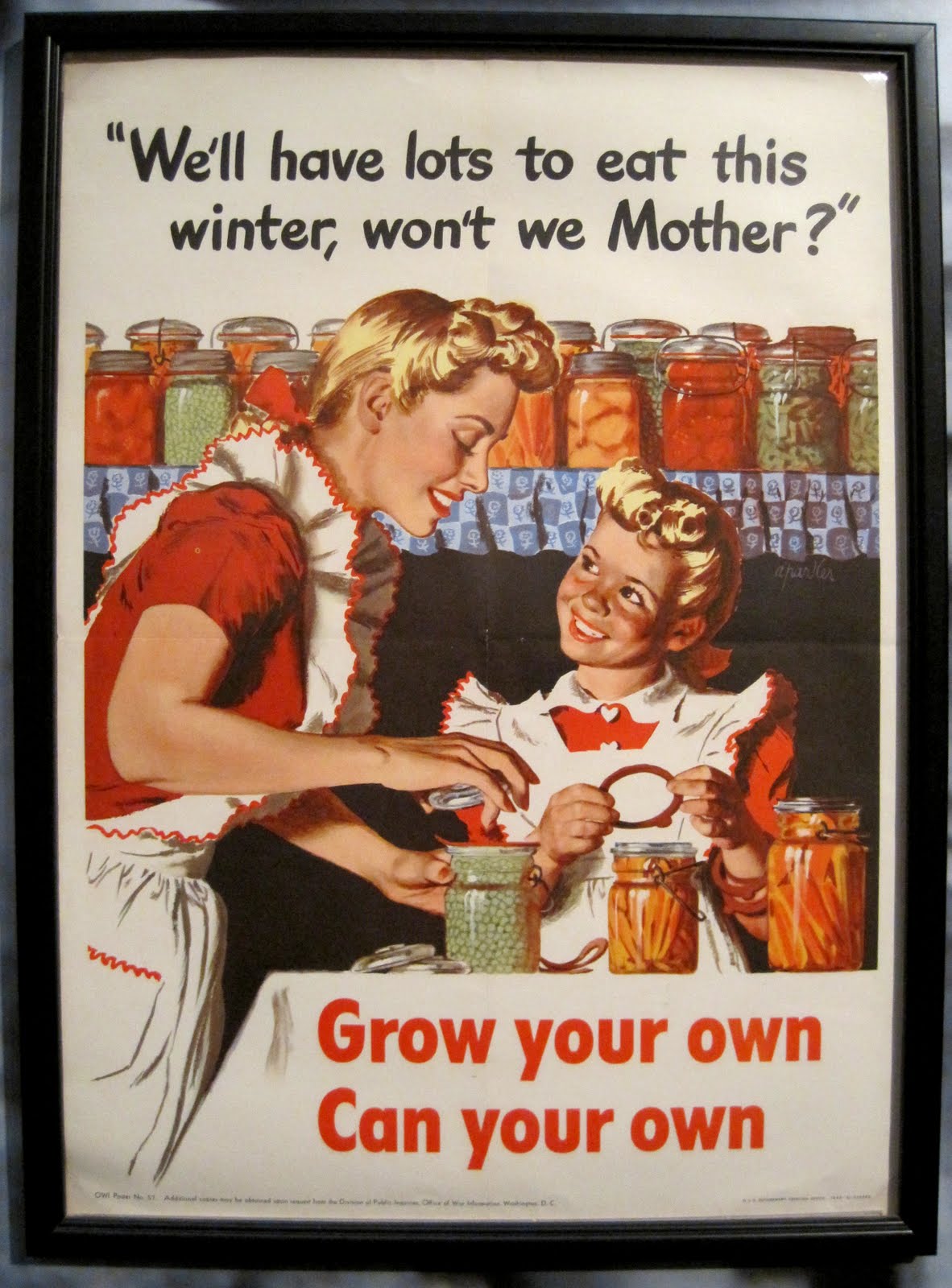 I love this poster from the National Museum of American History, a branch of the Smithsonians.
 Another fascinating pair of objects from the decorative arts museum were these Victorian era (what is the spanish era equivalent?) shell bouquets. While these are relatively common, I had never seen any so colorful or intricate before!
 This one in particular was stunning - an entire garden with maiden under a canopy of shell flowers under a glass dome! Sadly the lighting in the museum needs an upgrade and the picture isn't as clear as I had hoped for. Maybe some summer craft ideas for at the beach?
 Located just outside of the city center, the Museu de Arts Decoratives in the Palau Reial de Padralbes (seen below) is definitely worth the quick subway ride. The museum focuses on the decorative arts and interior design from Barcelona throughout history. The palace also contains a ceramic and a clothing museum, but I'll bring those to you at another date.
 Probably my favorite object in the museum was this dramatic decorative screen by Francesc d'Assis Gali. Gali was an artist and educator who practiced in an art school he founded in 1906 until his death in 1965 which produced such pupils as Juan Miro and Josep Artigas.
 The screen dates to 1929, a very important year as it turns out (especially for Gali) as it is the year of the Barcelona Universal Exhibition (think Barcelona Pavilion) of which he was the Artistic Advisor.
 The fair not only put Gali on the map internationally, but also Barcelona which has such a rich history of design. I'll be sharing with you some of my favorite items in this museum over the next few weeks -would love to hear what you think of them!
 Everywhere you go in Barcelona, you are being watched. If not by crowds of people out enjoying the city and people watching, then by the very buildings themselves.
 You can't help but notice the confrontational stares of statues on nearly every building. Beautiful, ugly, stately, comical; they all have something to say. The gentleman above reminds me so much of my father and I know what he is saying; I had too much wine with lunch!
  This doorway along the Carrer de Ferran in the Gothic quarter was probably my favorite, flanked by this lady and gentleman. Now what do you suppose they're thinking? That monocle doesn't look very friendly!
 This fountain, also in the Gothic quarter, had 3 haunting faces glaring out; not a place I would feel comfortable taking a drink!
 I think the Barcelonians are in on the joke. This small museum had windows for an exhibition showing photographs of people facing the sculptures themselves.
 Like I said yesterday, there is something interesting around every corner!
 Everyone knows of the elegant portrait 'Madame X' by John Singer Sargent from 1884. However, does everyone know the backstory of its' fascinating American subject, Virginie Amélie Avegno Gautreau?
 In 2004, Gioia Diliberto wrote a fantastic book in the historical fiction genre, 'I am Madame X' which took the facts of this fascinating woman and wove a story of what her life may have been like. I'm dusting off the bookshelves and giving away my copy to a reader. On Monday, October 18th I will make the decision and mail it off!

 She was painted a few times after the Sargent portrait, most famously by Gustave Courtois in 1891, which sharply references Madame X but in virginal white, seen above.
 One last portrait, showing her famous profile, by Antonio De La Gandara in 1898 probably captured her essence even better than Sargent. It was Gautreau's favorite and mine as well and I'll end the topic with it.
  Typically, I'm not a fan of sculpture. I'll rush past sculpture in any museum to get to the paintings (or more likely, the furniture and decorative arts collection!). Nothing against the artform, but for me it always fades into the background.
However, this bronze bust of Louis XIV from 1700 done copying Bernini always stops me dead in my tracks at the National Gallery of Art. The Duveen brothers art dealers from London swear this bust was given by Louis XIV to his brother Phillipe for his Chateau Saint-Cloud where it sat until the chateau was destroyed in 1870, although there is no documentation. Hope everyone has a great weekend!
 Last weekend I went to the National Gallery of Art East Wing to see a new exhibit about the renaissance artist, Arcimboldo.
 I didn't recognize the name, but I did recognize the art. Arcimboldo (1526-1593) is best known for the paintings of the 4 seasons he did for the Holy Roman Emperor, Maximilian II. Summer is probably the most well known, seen below, dating to 1563. These portraits are comprised entirely of flowers and fruits in the most unusual and imaginative ways.
 I spent hours in the exhibit examining the tiny details which are really remarkable.
  However, my favorite part of the exhibit is after Arcimboldo and not by the artist himself. The artist Philip Haas created a fiberglass scultpure that is ENORMOUS of the artist's painting of 'Winter' from the 4 seasons.
  It is set off so well by the I.M.Pei designed space and it took me awhile to snap a photo of it with my phone without numerous tourists having their picture taken in front of it! The painting, seen below, was probably inspired by Leonardo's grotesques, which also are featured in the exhibit.
 I recommend you all check out the exhibit which runs until January 9th. You won't regret it!
 I came across this delightful sketch by Elizabeth 'Beegle' Duquette of the Queen's theater at the Petit Trianon recently while reading More is More. Both talented artists, I'm amazed at the fascinating life they led. Click on the photos to enlarge and see the details. Have you read the 2 books on Duquette? Enjoy them?
 Photograph of the Queen's theater by myself while the drawing is from the book More is More


